Nourish Your Gut: 5 Foods for Better Digestion & Less Bloating
That uncomfortable drag after a meal, the quiet bloat that steals your energy? You’re not alone. Imagine feeling light, vibrant, and truly comfortable in your own skin again. The journey to a calm, happy gut often begins not with complicated remedies, but with simple, powerful foods from your kitchen.
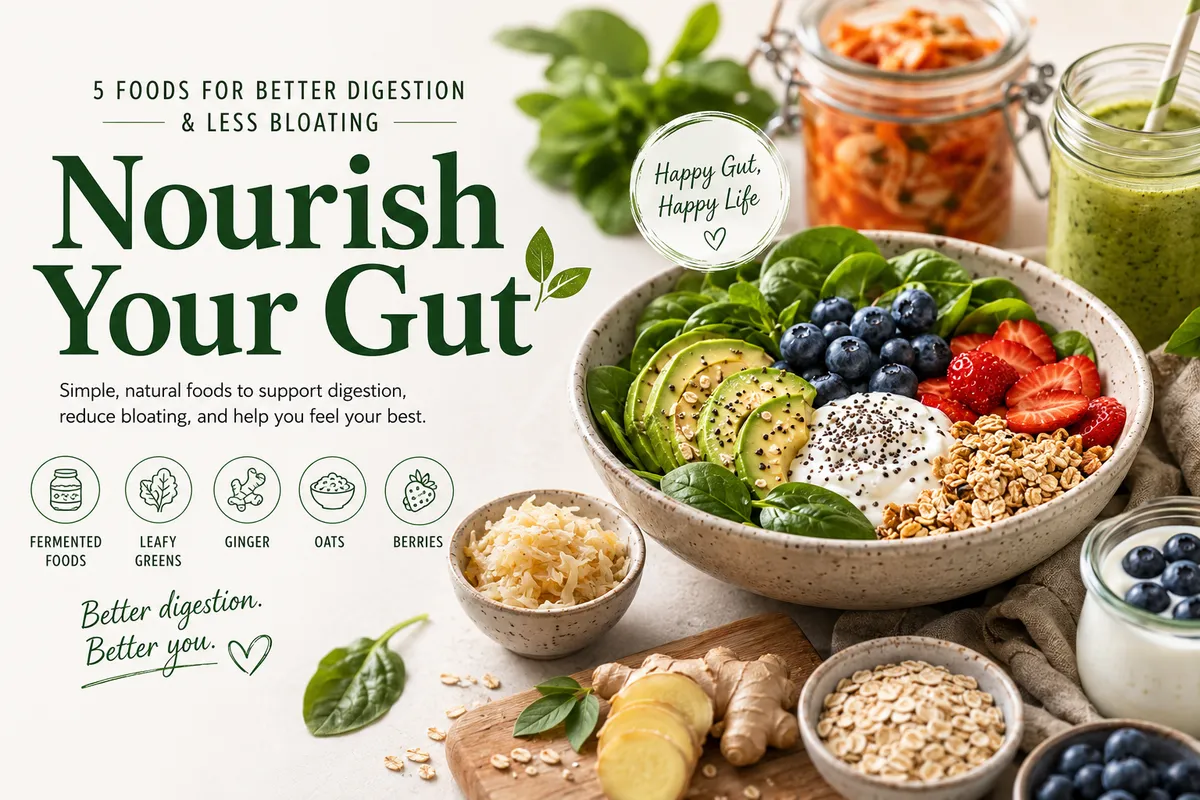
That uncomfortable drag after a meal, the quiet bloat that steals your energy? You’re not alone. Imagine feeling light, vibrant, and truly comfortable in your own skin again. The journey to a calm, happy gut often begins not with complicated remedies, but with simple, powerful foods from your kitchen.
Key Takeaways
- ✓Incorporate probiotic-rich fermented foods (kefir, Greek yogurt) to feed beneficial gut bacteria.
- ✓Utilize natural digestion aids like ginger and fennel to relax intestinal muscles.
- ✓Diversify your dietary fiber with oats, chia seeds, and leafy greens to prevent bloating.
- ✓Stay hydrated to support fiber transit and soften digestive discomfort.
- Incorporate fermented and **Probiotic Rich Foods** daily for beneficial bacteria.
- Prioritize leafy greens for essential fiber and nutrients.
- Use ginger to **Soften Digestive Discomfort**.
- Enjoy oats for their gentle, soluble fiber.
- Add berries for diverse fiber and antioxidants.
That uncomfortable drag after a meal, the quiet bloat that steals your energy? You’re not alone. Imagine feeling light, vibrant, and truly comfortable in your own skin again. The journey to a calm, happy gut often begins not with complicated remedies, but with simple, powerful **Foods to Reduce Bloating** from your kitchen. As Stewart Lucas, your culinary coach and nutritionist from NutriGuide, I'm here to help you **Improve Digestion Naturally** with practical, delicious choices.
Why Gut Health Matters
Your gut is more than just a digestive tube. It’s a bustling ecosystem, a powerhouse of activity influencing everything from your mood to your immunity. When this system hums along smoothly, you feel clear, energetic, and balanced. When it’s off-kilter, discomfort can settle in, manifesting as bloating, gas, or general digestive sluggishness. Simple food choices can make a significant shift.
1. Fermented and Probiotic Rich Foods
Think vibrant, tangy additions like kefir, yogurt with live cultures, or naturally fermented sauerkraut. These foods introduce beneficial bacteria to your gut, supporting a healthy microbial balance.
How They Help:
- Replenish good gut bacteria.
- Aid in breaking down food more efficiently.
- Support nutrient absorption.
Simple Ways to Enjoy:
Stir a spoonful of plain kefir into your morning smoothie. Add a forkful of vibrant sauerkraut to your salad or sandwich. Enjoy a small bowl of unsweetened yogurt topped with berries.
Eating well for your gut and adopting an **Anti Inflammatory Diet** isn't about restriction; it's about adding richness. Notice the subtle hum of vitality these simple foods bring. It’s a gentle, consistent way to feel better from the inside out.
2. Leafy Greens: Fiber's Gentle Hand
Spinach, kale, collard greens – these green giants are packed with insoluble fiber, which acts like a broom for your digestive system. They also provide prebiotics, which feed your good gut bacteria.
How They Help:
- Promote regular bowel movements.
- Support a diverse gut microbiome.
- Offer vitamins and minerals vital for overall health.
Simple Ways to Enjoy:
Blend a handful of spinach into your fruit smoothie. Sauté kale with garlic as a vibrant side dish. Build your lunch around a generous bed of mixed greens.
3. Ginger: The Soothing Root
This warming, aromatic root has been cherished for centuries for its digestive benefits. Ginger contains compounds like gingerol, known for their calming properties on the digestive tract.
How It Helps:
- Eases nausea and indigestion.
- May help reduce bloating and gas.
- Promotes healthy movement in the gut.
Simple Ways to Enjoy:
Brew fresh ginger tea by steeping thin slices in hot water. Grate a little fresh ginger into stir-fries or soups. Add a tiny pinch to fruit salads for a gentle zing.
The American Gut Project, one of the largest citizen science projects of its kind, consistently highlights the importance of **Dietary Fiber Diversity**. Consuming a wide range of plant-based foods, rich in different types of fiber, is strongly associated with excellent **Microbiome Health** and a diverse gut, which can significantly reduce instances of bloating and digestive discomfort.
4. Oats: Your Gentle Daily Fiber
Simple, humble oats are a champion for gut health. They contain beta-glucan, a type of soluble fiber that forms a gel-like substance in your digestive tract. This helps slow digestion and supports a healthy environment for gut bacteria.
How They Help:
- Provide sustained energy.
- Promote feelings of fullness.
- Support healthy cholesterol levels.
Simple Ways to Enjoy:
Start your day with a comforting bowl of oatmeal, which serves as the perfect **Gut Friendly Breakfast**. Blend rolled oats into a smoothie for extra creaminess and fiber. Bake them into simple oat muffins with fruit.
5. Berries: Colorful Fiber Boost
Strawberries, blueberries, raspberries – these small, vibrant fruits are rich in both soluble and insoluble fiber, along with powerful antioxidants. Their diverse fiber content contributes to a robust and happy gut.
How They Help:
- Increase feelings of satiety.
- Nourish beneficial gut bacteria.
- Help maintain regularity.
Simple Ways to Enjoy:
Add a handful of fresh or frozen berries to your morning cereal or yogurt. Enjoy them as a light, refreshing snack. Blend them into colorful, nutrient-dense smoothies.
Your Next Step: Embrace Gut Wellness
Incorporating these **Natural Bloating Remedies** into your cooking is an act of care, a foundation for a healthier, more vibrant you. Start small, be consistent, and enjoy the journey to a happier gut.
Frequently Asked Questions
How quickly can I expect to see results?▼
Digestive changes can be gradual. Many people notice a difference in bloating and regularity within a few days to a couple of weeks of consistent intake. Listen to your body.
Do I need to eat all five foods every day?▼
Not necessarily. The goal is consistent inclusion and variety. Aim to incorporate a few of these foods regularly, rotating them to provide a diverse nutrient intake for your gut.
What if I'm sensitive to fiber or probiotics?▼
Start slowly, with small portions, and increase gradually. For probiotics, begin with small amounts of fermented foods. If sensitivities persist, consult a healthcare professional.
Scientific References
- Johnston, C. et al. (2020). 'Prebiotic Fiber and Gut Microbiota Regulation.' Journal of Nutrition, 150(4), 882–889. [View Study]
- Gibson, P. R., & Shepherd, S. J. (2010). 'Evidence-based dietary management of functional gastrointestinal symptoms: The FODMAP approach.' Journal of Gastroenterology and Hepatology, 25(2), 252-258. [View Study]

Stewart Lucas
Nutritionist & Recipe DeveloperStewart Lucas is a nutritionist and recipe developer representing the NutriGuide team. All articles, dietary guidelines, and meal plans published on this site are designed and audited by certified dietitians and clinical nutrition professionals to guarantee absolute accuracy.
Explore More


Community Reviews
Please log in to leave a review.