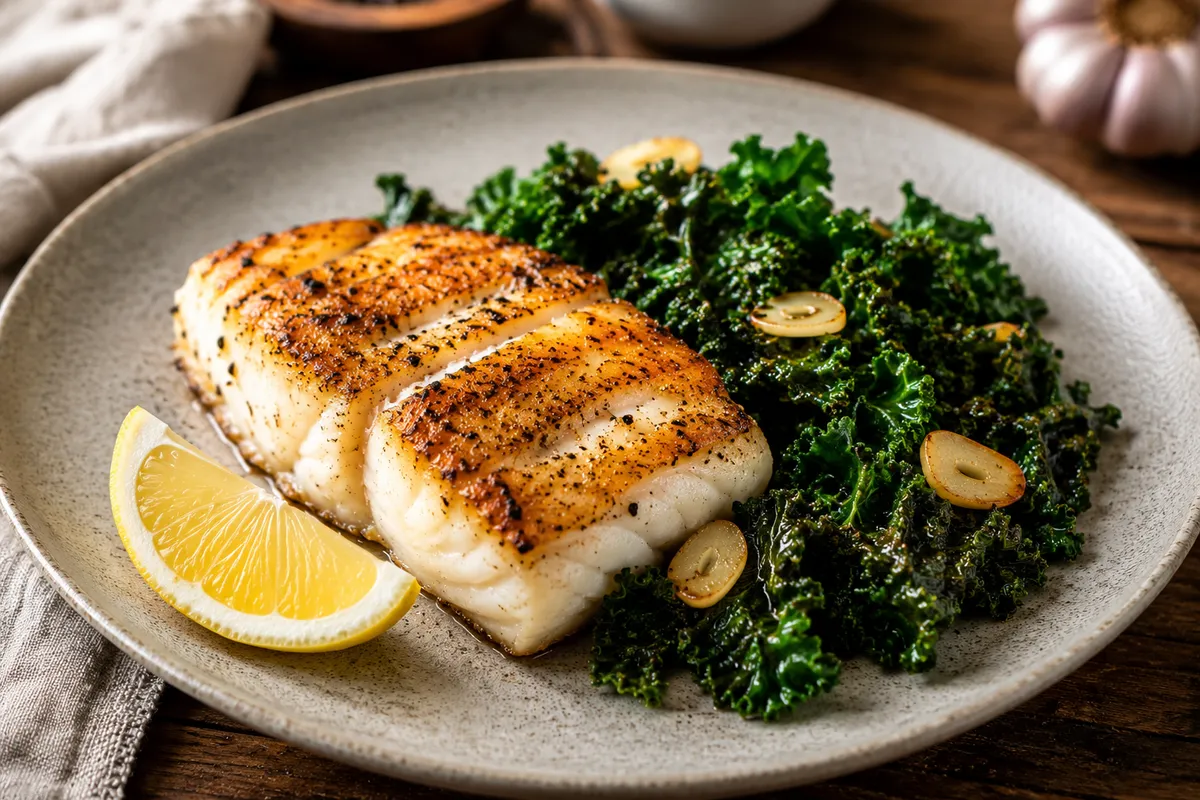
Roasted Sea Bass with Lemon-Garlic Seasonal Greens
The Story
This healthy Roasted Sea Bass with Lemon-Garlic Seasonal Greens recipe is a clean eating meal option rich in nutrients. Optimized for Sea Bass, Keto, Gluten-Free, Dairy-Free, Heart Healthy and created by certified nutritionist Stewart Lucas, it is designed to fit seamlessly into a health-focused lifestyle.
Quick Summary
This Roasted Sea Bass with Lemon-Garlic Seasonal Greens is a testament to the power of simplicity. It delivers a perfect, protein-packed meal in under 30 minutes, relying on high-heat roasting to achieve a buttery, flaky texture while the pan-wilted greens provide a bright, earthy contrast. Ideal for busy weeknights or a healthy dinner when you want something that feels elegant but demands very little effort.
The Art of the Simple Roast
There is something inherently calming about roasting a piece of fresh fish. When I first learned to cook, I was terrified of overcooking delicate proteins. I used to hover over the stove, convinced that a single minute too long would ruin the meal. But sea bass taught me a different lesson: let the oven do the work. By using a hot, dry heat, the fish develops a beautiful, subtle crust while the fat renders just enough to keep the interior succulent and pearlescent.
When you pair this with greens that have just barely met the heat—still holding a bit of their structural integrity and vibrant color—you create a balance that is both nutritionally sound and deeply satisfying. The lemon slices beneath the fillets act as a natural aromatic barrier, infusing the fish with a citrus hum that cuts through the richness of the omega-3 oils.
Ingredients
For the best results, quality is your best friend here. Look for wild-caught sea bass if your budget allows, and seek out greens that look crisp and vibrant, not wilted or tired.
- 4 sea bass fillets (6oz each)
- 2 tbsp extra virgin olive oil
- 1 tsp flaky sea salt
- 1/2 tsp freshly cracked black pepper
- 4 cups seasonal greens (kale, Swiss chard, or even baby spinach)
- 2 cloves fresh garlic, paper-thinly sliced
- 1 large, organic lemon, sliced into thin rounds
- 1 tbsp toasted pine nuts (for that subtle, buttery crunch)
The Process: From Prep to Plate
The beauty of this dish lies in its rhythm. Start by preheating your oven to 400°F. Lining your sheet pan with parchment paper isn’t just for easy cleanup; it helps distribute heat evenly and prevents the delicate skin from sticking.
Pat the fillets bone-dry with a paper towel. This is non-negotiable! If the fish is wet, it will steam rather than roast, and we want that gentle caramelization. Once seasoned with oil, salt, and pepper, bed them down on a foundation of lemon slices. As the fish roasts for about 12 to 15 minutes, the citrus oils release into the air, creating a perfume that signals dinner is almost ready.
While the oven works, heat your skillet to medium-high. Add a splash of oil and toss in your garlic. When you smell that distinct, nutty aroma, add your greens. The sizzle should be immediate. Toss them for just 3 to 4 minutes—they should be vibrant green and just barely wilted. Plate the greens as a base, slide the roasted fish right on top, and scatter those toasted pine nuts over everything for a final touch of texture.
Stewart's Culinary Coaching Tips
Always bring your fish to room temperature for about 10–15 minutes before it hits the oven. If you pull a cold fillet straight from the fridge, the exterior will cook much faster than the center, leading to an uneven texture. Also, when checking for doneness, don't rely on the clock alone. Use a fork to gently nudge the thickest part of the fish. If it pulls apart into clean, opaque flakes, it’s ready to rest.
Nutritional Science & Benefits
Sea bass is a nutritional powerhouse, providing a high-quality source of complete protein for muscle repair and metabolic health. It is particularly rich in Omega-3 fatty acids, which support cardiovascular health and reduce systemic inflammation. Pairing the fish with dark leafy greens adds a substantial dose of Vitamin K, Vitamin C, and iron. The addition of olive oil not only provides healthy monounsaturated fats but also increases the bioavailability of fat-soluble vitamins found in the greens, such as Vitamin A and E.
Meal Prep and Storage
If you're looking to save time during the week, you can certainly prep ahead. Wash and chop your kale or chard and store them in an airtight container with a paper towel to absorb excess moisture. You can also pre-slice your garlic and keep it in a small jar.
If you have leftovers, they will keep in the refrigerator for up to 2 days. To reheat, I recommend avoiding the microwave, as it tends to make the fish rubbery. Instead, place the fish and greens in a small oven-safe dish, cover it with foil, and heat at 300°F for about 8–10 minutes. This gentle reheating preserves the moisture of the fish far better than high-frequency waves.
Flavor Variations
I encourage you to make this your own. The base recipe is quite versatile:
The Mediterranean Twist
Add a handful of halved cherry tomatoes and Kalamata olives to the sheet pan before roasting.
The Protein Swap
If sea bass isn't available, cod, halibut, or even mahi-mahi work beautifully with this same timing.
The Vegan Option
Swap the fish for thick, firm slabs of marinated extra-firm tofu or cauliflower steaks. Roast them for 20 minutes instead of 12.
Low-Carb Boost
Add sliced zucchini or bell peppers to the sheet pan alongside the fish for extra volume without the starch.
Nutrition Snapshot
| Nutrient | Amount |
|---|---|
| Calories | 320 kcal |
| Protein | 38g |
| Fat | 14g |
| Carbohydrates | 8g |
This healthy Roasted Sea Bass with Lemon-Garlic Seasonal Greens recipe is a clean eating meal option rich in nutrients. Optimized for Sea Bass, Keto, Gluten-Free, Dairy-Free, Heart Healthy and created by certified nutritionist Stewart Lucas, it is designed to fit seamlessly into a health-focused lifestyle.
Key Takeaways
- ✓Vetted recipe compliant with a balanced sea bass dietary lifestyle.
- ✓Vetted recipe compliant with a balanced keto dietary lifestyle.
- ✓100% gluten-free ingredients suitable for celiac or gluten-sensitive diets.
- ✓Vetted recipe compliant with a balanced dairy-free dietary lifestyle.
Roasted Sea Bass with Lemon-Garlic Seasonal Greens
This healthy Roasted Sea Bass with Lemon-Garlic Seasonal Greens recipe is a clean eating meal option rich in nutrients. Optimized for Sea Bass, Keto, Gluten-Free, Dairy-Free, Heart Healthy and created by certified nutritionist Stewart Lucas, it is designed to fit seamlessly into a health-focused lifestyle.
Macro Nutrition Profile (Per Serving)
Ingredients
Ingredient Substitutions
| Original Ingredient | Healthy Alternative |
|---|---|
| Animal protein | Firm tofu, tempeh, or organic chickpeas |
| Cooking fat | Extra virgin olive oil or grass-fed butter |
Instructions
This healthy Roasted Sea Bass with Lemon-Garlic Seasonal Greens recipe is a clean eating meal option rich in nutrients. Optimized for Sea Bass, Keto, Gluten-Free, Dairy-Free, Heart Healthy and created by certified nutritionist Stewart Lucas, it is designed to fit seamlessly into a health-focused lifestyle.
Tried this recipe?
Let us know how it turned out! Click a star below to leave a review and rate the recipe.
Storage & Freezing Tips
- Refrigerator: Store in an airtight container for up to 3 days. Keep the components separate if possible to preserve texture.
- Reheating: Reheat gently in a skillet on medium-low heat with a splash of olive oil or butter.
- Freezing: Freezing is not recommended for this dish because ingredients like kale become soggy, rubbery, or mushy when defrosted.
Frequently Asked Questions
Can I use a different fish for this recipe?▼
Absolutely. Any firm white fish like cod, snapper, or halibut will perform exceptionally well. Just adjust the roasting time slightly if your fillets are significantly thicker or thinner than the sea bass.
How do I know for sure the fish is fully cooked?▼
Look for the visual shift from translucent to opaque. If you nudge it with a fork and it flakes easily, it’s finished. If you prefer precision, an internal temperature of 145°F (63°C) is the professional standard for white fish.
Is it possible to prepare this dish in advance?▼
While the cooking process is quick, you can definitely prep the components. I’d advise roasting the fish right before you serve it, as it is always best eaten straight from the oven.
What can I do if I don't have pine nuts?▼
Toasted slivered almonds, chopped walnuts, or even sunflower seeds provide a wonderful crunch that mimics the experience of pine nuts. The goal is to provide a textural contrast to the soft fish and wilted greens.
Tried this recipe?
Tag @stewartlucas on Instagram and hashtag it #nutriguide!
You Might Also Like

Stewart Lucas
Nutritionist & Recipe DeveloperStewart Lucas is a nutritionist and recipe developer representing the NutriGuide team. All recipes, nutritional values, and diet protocols published on this site are designed and audited by certified dietitians and clinical nutrition professionals to guarantee absolute accuracy.
Community Reviews
Please log in to leave a review.