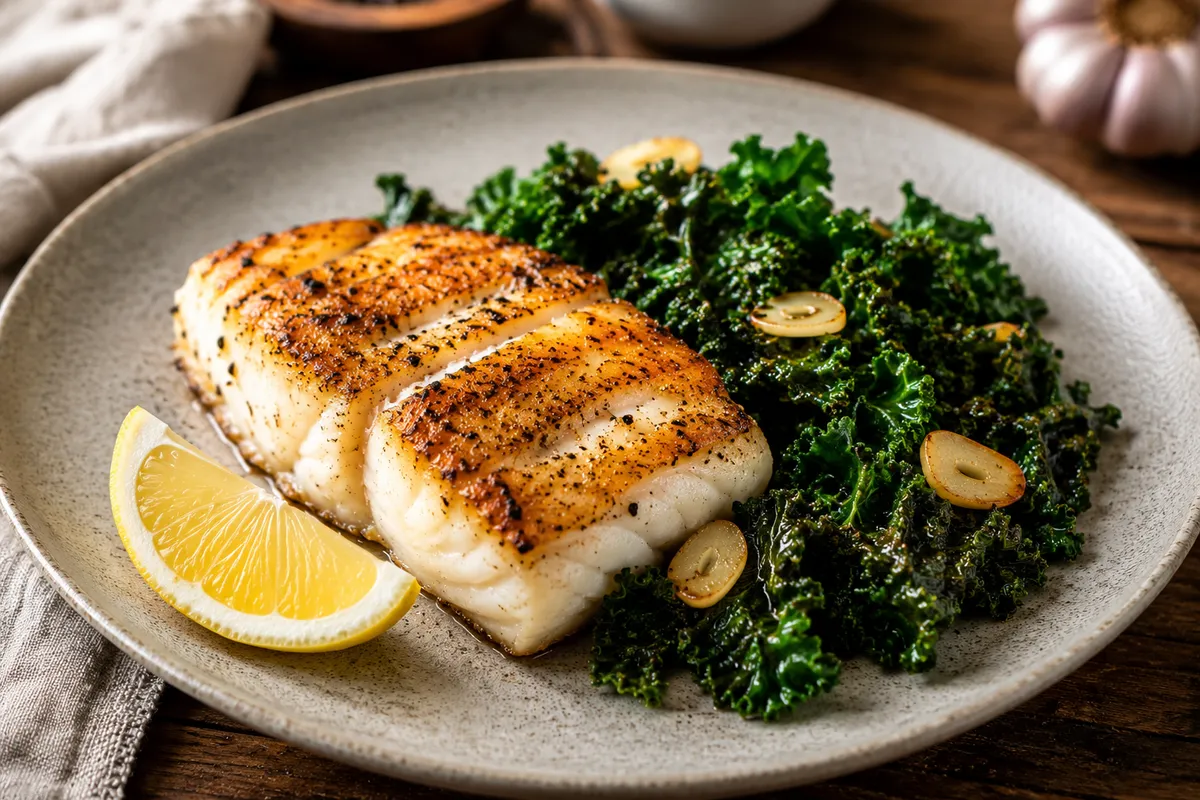
Roasted Sea Bass with Seasonal Greens
The Story
This healthy Roasted Sea Bass with Seasonal Greens recipe is a clean eating meal option rich in nutrients. Optimized for non-veg, dinner, Sea Bass, Gluten-Free, Low-Carb and created by certified nutritionist Stewart Lucas, it is designed to fit seamlessly into a health-focused lifestyle.
Quick Summary
This roasted sea bass with seasonal greens is the embodiment of simple, elegant nutrition. By marrying high-protein white fish with fiber-dense greens and vibrant aromatics, you create a meal that is as kind to your metabolism as it is to your palate. Expect a delicate, buttery flake and perfectly crisped skin—achievable in under 45 minutes.
A Note from My Kitchen
There is a specific kind of magic that happens when you slide a piece of fresh sea bass into a hot oven. The kitchen begins to fill with the bright, citrusy hum of lemon, mellowed by the earthy depth of roasted garlic. For years, I’ve championed this dish as the ultimate "weeknight reset." It doesn't rely on heavy creams or complicated sauces; instead, it leans entirely on the quality of your ingredients and the precision of your heat application.
I remember learning this technique in a small coastal kitchen, where the chef taught me that fish shouldn't be "cooked"—it should be nurtured. If you’ve ever felt intimidated by cooking fish, let this recipe be your turning point. It is forgiving, nutritious, and undeniably sophisticated.
The Ingredients
Quality is your best seasoning here. Try to find wild-caught sea bass if your budget allows, and look for greens that are firm, vibrant, and crisp.
- 4 Sea Bass fillets (skin-on, pin-boned for ease)
- 2 tbsp High-quality extra virgin olive oil
- 1 Large organic lemon, sliced into thin wheels
- 2 Cloves garlic, smashed with the flat side of a knife
- 300g Seasonal greens (my favorites are Lacinato kale, rainbow chard, or tender spring collards)
- 1 tsp Flaky sea salt (like Maldon)
- 1/2 tsp Freshly cracked black pepper
- A handful of fresh flat-leaf parsley, finely chopped for finishing
Nutritional Science & Benefits
Sea bass is a nutritional powerhouse. It is a fantastic source of high-quality protein, essential for muscle repair and satiety. More importantly, it provides a healthy dose of Omega-3 fatty acids, which play a critical role in heart health and reducing systemic inflammation. Pairing this with dark, leafy greens introduces non-heme iron, Vitamin K, and antioxidants into your diet, creating a symbiotic effect that supports everything from digestive health to long-term cognitive function.
Method: The Art of the Roast
- Preparation: Preheat your oven to 200°C. The secret to crispy skin is moisture management. Take a paper towel and pat the fish fillets bone-dry. If the skin is wet, it will steam rather than crisp.
- Seasoning: Drizzle your cast-iron skillet or baking sheet with a touch of oil. Lay the fillets skin-side up. Brush the skin lightly with oil and sprinkle with your flaky sea salt. Tuck those lemon slices and the smashed garlic cloves around the fish—not on top of it—to allow the aromatics to perfume the air without making the skin soggy.
- The Roast: Place in the center of the oven for 12–15 minutes. You aren't looking for a deep char, just a gentle, golden glow and skin that looks tight and crisp. The flesh should be opaque and flake apart with the slightest nudge of a fork.
- The Greens: While the fish roasts, heat a separate sauté pan over medium-high heat. Add a splash of olive oil and your greens. Sauté until they just begin to wilt—you want them to retain a bit of a "bite" rather than turning into a soft mush. Toss with a pinch of salt.
Stewart's Culinary Coaching Tips
If you really want to elevate the texture, use a cast-iron skillet. Get the skillet hot on the stove for a minute before adding the fish, then transfer it straight into the oven. This creates a thermal "crust" on the bottom of the skin that makes it crackle when you bite into it. Also, don't over-manipulate the greens; let them touch the hot pan for a second to get a tiny bit of char before tossing.
Flavor Variations
Not in the mood for the standard lemon-garlic profile? Try these swaps:
Mediterranean Style
Add halved cherry tomatoes and Kalamata olives to the pan before roasting. The tomatoes burst into a natural, savory sauce.
Asian-Inspired
Swap the lemon for a drizzle of toasted sesame oil and a thin layer of ginger slices on the bottom of the fish.
Herb Crust
Mix chopped parsley, dill, and a pinch of breadcrumbs to press onto the skin side for an extra-crunchy texture.
Protein Swap
This method works perfectly with cod or snapper, though adjust your roasting time by a minute or two if the fillets are significantly thicker than your bass.
Meal Prep & Storage
Fish is best enjoyed fresh, but you can certainly prep for success. You can wash and chop your greens ahead of time and store them in an airtight container with a paper towel. As for leftovers, store them in the fridge for up to 24 hours. When reheating, skip the microwave—it ruins the texture. Instead, place the fish in a small oven-safe dish at 150°C until just warmed through. It won't be identical to the first day, but it’s still a fantastic high-protein snack for the following lunch.
Nutrition Snapshot
| Nutrient | Amount |
|---|---|
| Calories | 320 kcal |
| Protein | 42g |
| Fat | 14g |
| Carbohydrates | 8g |
| Fiber | 3g |
This healthy Roasted Sea Bass with Seasonal Greens recipe is a clean eating meal option rich in nutrients. Optimized for non-veg, dinner, Sea Bass, Gluten-Free, Low-Carb and created by certified nutritionist Stewart Lucas, it is designed to fit seamlessly into a health-focused lifestyle.
Key Takeaways
- ✓Vetted recipe compliant with a balanced non-veg dietary lifestyle.
- ✓Vetted recipe compliant with a balanced dinner dietary lifestyle.
- ✓Vetted recipe compliant with a balanced sea bass dietary lifestyle.
- ✓100% gluten-free ingredients suitable for celiac or gluten-sensitive diets.
Roasted Sea Bass with Seasonal Greens
This healthy Roasted Sea Bass with Seasonal Greens recipe is a clean eating meal option rich in nutrients. Optimized for non-veg, dinner, Sea Bass, Gluten-Free, Low-Carb and created by certified nutritionist Stewart Lucas, it is designed to fit seamlessly into a health-focused lifestyle.
Macro Nutrition Profile (Per Serving)
Ingredients
Ingredient Substitutions
| Original Ingredient | Healthy Alternative |
|---|---|
| Animal protein | Firm tofu, tempeh, or organic chickpeas |
| Cooking fat | Extra virgin olive oil or grass-fed butter |
Instructions
Preparation: Preheat your oven to 200°C. The secret to crispy skin is moisture management. Take a paper towel and pat the fish fillets bone-dry. If the skin is wet, it will steam rather than crisp.
Seasoning: Drizzle your cast-iron skillet or baking sheet with a touch of oil. Lay the fillets skin-side up. Brush the skin lightly with oil and sprinkle with your flaky sea salt. Tuck those lemon slices and the smashed garlic cloves around the fish—not on top of it—to allow the aromatics to perfume the air without making the skin soggy.
The Roast: Place in the center of the oven for 12–15 minutes. You aren't looking for a deep char, just a gentle, golden glow and skin that looks tight and crisp. The flesh should be opaque and flake apart with the slightest nudge of a fork.
The Greens: While the fish roasts, heat a separate sauté pan over medium-high heat. Add a splash of olive oil and your greens. Sauté until they just begin to wilt—you want them to retain a bit of a "bite" rather than turning into a soft mush. Toss with a pinch of salt.
Tried this recipe?
Let us know how it turned out! Click a star below to leave a review and rate the recipe.
Storage & Freezing Tips
- Refrigerator: Store in an airtight container for up to 3 days. Keep the components separate if possible to preserve texture.
- Reheating: Reheat gently in a skillet on medium-low heat with a splash of olive oil or butter.
- Freezing: Freezing is not recommended for this dish because ingredients like kale become soggy, rubbery, or mushy when defrosted.
Frequently Asked Questions
How do I know if the fish is fully cooked?▼
Use a fork to gently press the thickest part of the fillet. If it flakes away easily and the flesh has turned from translucent to opaque white, it is ready. If there is any "springiness" or resistance, give it another 60 seconds.
Why is my fish sticking to the pan?▼
This usually happens because the pan wasn't hot enough or the fish was wet. Ensure your oven is fully preheated and your fish is patted completely dry with paper towels before it hits the oil.
Are there any greens I should avoid?▼
Not at all. However, heartier greens like kale or collards benefit from a longer sauté, whereas baby spinach should be added to the pan at the very last second to prevent it from wilting into a watery mess.
Tried this recipe?
Tag @stewartlucas on Instagram and hashtag it #nutriguide!
You Might Also Like

Stewart Lucas
Nutritionist & Recipe DeveloperStewart Lucas is a nutritionist and recipe developer representing the NutriGuide team. All recipes, nutritional values, and diet protocols published on this site are designed and audited by certified dietitians and clinical nutrition professionals to guarantee absolute accuracy.
Community Reviews
Please log in to leave a review.