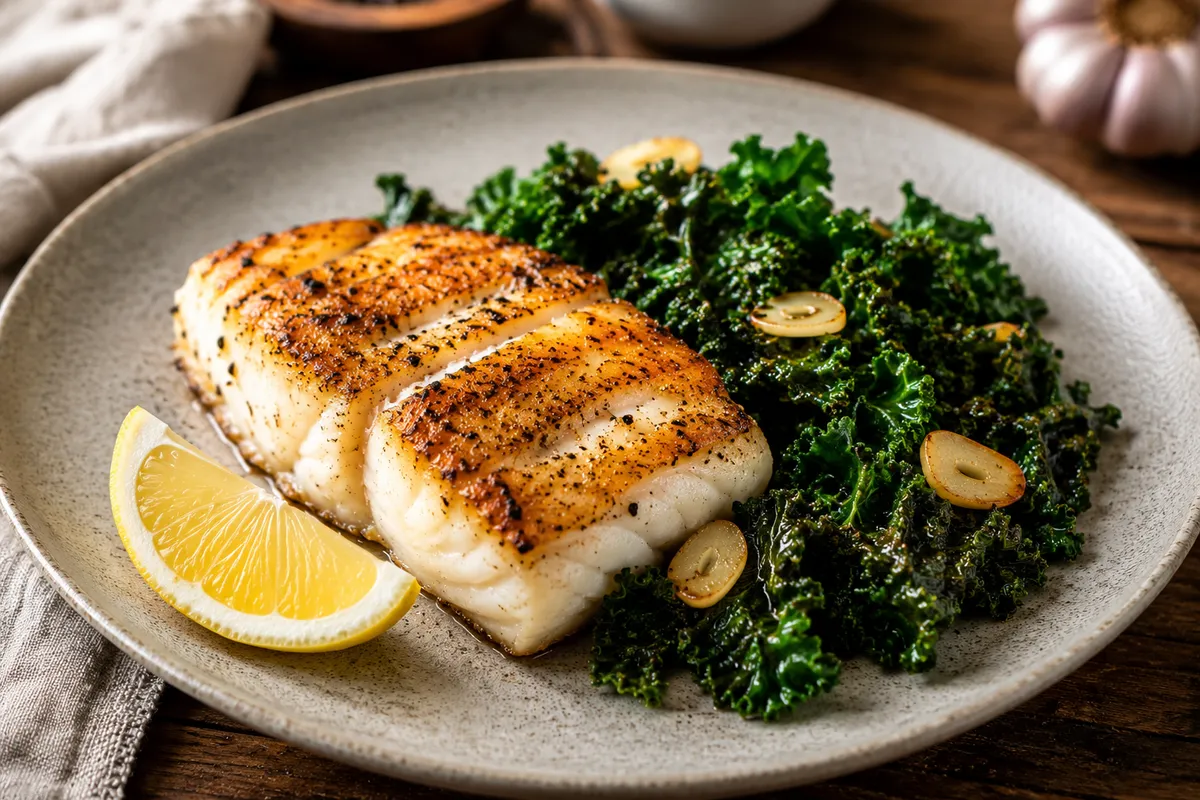
Steamed Ginger-Soy White Fish with Baby Bok Choy
The Story
This healthy Steamed Ginger-Soy White Fish with Baby Bok Choy recipe is a clean eating meal option rich in nutrients. Optimized for Dairy-Free, Gluten-Free, Anti-Inflammatory, Gut Health, Muscle Maintenance and created by certified nutritionist Stewart Lucas, it is designed to fit seamlessly into a health-focused lifestyle.
Steamed Ginger-Soy White Fish with Baby Bok Choy
This dish is the definition of "clean cooking" that doesn't sacrifice flavor. By steaming fresh white fish and bok choy, we preserve the delicate structure of the protein and the vibrant crunch of the vegetables. It is a light, high-protein meal that hits the table in under 20 minutes, perfect for busy weeknights when you still want to nourish your body properly.
A Simple, Sophisticated Ritual
There is something inherently calming about the process of steaming. Unlike the frantic sizzle of a high-heat stir-fry, steaming is quiet. You start with a shallow pool of water, then introduce the aromatic heat of fresh ginger and the deep, savory hum of soy sauce. As the water boils, the steam rises, carrying the sharp, citrusy notes of the ginger through the fish, effectively poaching it in its own juices and aromatics.
I often turn to this meal when I want to press "reset" on my digestion. It is incredibly gentle on the stomach, yet the ginger provides a subtle, warming heat that makes it feel like comfort food. The white fish—cod, sea bass, or even tilapia—takes on a silky, buttery texture that practically melts on the tongue, while the bok choy stays bright green and snappy, providing that essential contrast in texture.
The Ingredients
- 4 fillets (6oz each) of firm white fish (cod, sea bass, or halibut)
- 1 lb baby bok choy, washed thoroughly and halved lengthwise
- 2 tbsp naturally brewed soy sauce or tamari
- 1 tbsp toasted sesame oil
- 1 tbsp fresh ginger, cut into matchstick-thin julienne
- 2 cloves garlic, paper-thin slices
- 2 stalks green onion, julienned or sliced on a bias
- Optional: A pinch of red chili flakes for a subtle kick
The Science Behind the Steam
Steaming is one of the most underrated cooking methods for preserving water-soluble vitamins like Vitamin C and B-complex vitamins, which often leach out during boiling. White fish is an excellent source of lean protein and essential minerals like selenium, which supports thyroid function. Pairing this with bok choy, a cruciferous vegetable, provides a dose of sulforaphane—a compound known for its anti-inflammatory properties. This combination is essentially a biological tonic for your immune system.
Preparation Method
1. Set the Stage: Fill a deep skillet or wok with about an inch of water. Bring it to a rolling boil. If you are using a bamboo steamer or a metal rack, set it inside now. Ensure the water level is just below the rack so you don't boil the fish directly.
2. Assemble: Place your fish fillets on a heat-proof plate. Ideally, use a plate with slightly raised edges to catch the flavorful liquid that will accumulate. Arrange the halved bok choy around the fillets.
3. Season: Scatter the julienned ginger and sliced garlic over the fish. Drizzle the soy sauce and toasted sesame oil evenly over everything. The sesame oil will perfume the entire kitchen as it warms up.
4. The Steam: Carefully lower the plate into the steamer or onto the rack. Cover tightly with a lid. Steam for 8–10 minutes depending on the thickness of your fillets. The fish is done when it is opaque throughout and flakes easily with a gentle nudge from your fork.
5. Finish: Garnish generously with the fresh green onions and a sprinkle of chili flakes if you enjoy a little warmth.
The biggest mistake I see with steaming is overcrowding. Give the fillets room to breathe! If the fish is piled on top of the greens, the parts that are touching will turn mushy. Also, always use a splash of rice wine or a little extra ginger in the water base—it infuses the steam itself with flavor, ensuring your fish is seasoned from the outside in, not just the top down.
Nutrition Snapshot
| Nutrient | Amount |
|---|---|
| Calories | 280 kcal |
| Protein | 42g |
| Fat | 6g |
| Carbohydrates | 8g |
Meal Prep & Storage Guide
This dish is best eaten fresh, but it handles storage surprisingly well if you are diligent. To prep ahead, portion your fish into airtight containers and keep your ginger and aromatics ready to go. When you are ready to eat, simply steam as instructed. If you have leftovers, store them in a glass container for up to 48 hours. When reheating, do not use the microwave—it makes the fish rubbery. Instead, place the leftovers in a small pan with a teaspoon of water, cover, and steam gently on low heat until warmed through.
Flavor Variations
The Zesty Twist
Add lime zest to the soy-ginger marinade for a brighter, more citrus-forward finish.
The Umami Bomb
Add a teaspoon of miso paste to your soy sauce mix to add a complex, fermented depth.
Protein Swap
This method works beautifully with thinly sliced chicken breast or tofu steaks; just adjust your steaming time based on the protein's density.
Low-Carb Boost
Add sliced shiitake mushrooms to the steamer; they absorb the soy and ginger juices and offer a wonderful meaty texture.
This healthy Steamed Ginger-Soy White Fish with Baby Bok Choy recipe is a clean eating meal option rich in nutrients. Optimized for Dairy-Free, Gluten-Free, Anti-Inflammatory, Gut Health, Muscle Maintenance and created by certified nutritionist Stewart Lucas, it is designed to fit seamlessly into a health-focused lifestyle.
Key Takeaways
- ✓Vetted recipe compliant with a balanced dairy-free dietary lifestyle.
- ✓100% gluten-free ingredients suitable for celiac or gluten-sensitive diets.
- ✓Formulated with foods rich in antioxidants to minimize systemic inflammation.
- ✓Vetted recipe compliant with a balanced gut health dietary lifestyle.
Steamed Ginger-Soy White Fish with Baby Bok Choy
This healthy Steamed Ginger-Soy White Fish with Baby Bok Choy recipe is a clean eating meal option rich in nutrients. Optimized for Dairy-Free, Gluten-Free, Anti-Inflammatory, Gut Health, Muscle Maintenance and created by certified nutritionist Stewart Lucas, it is designed to fit seamlessly into a health-focused lifestyle.
Macro Nutrition Profile (Per Serving)
Ingredients
Ingredient Substitutions
| Original Ingredient | Healthy Alternative |
|---|---|
| Salmon/Cod | Steelhead trout, halibut, or sea bass (baking times may vary) |
| Asparagus/Veg | Zucchini slices, broccoli florets, or green beans (roast at same temperature) |
Instructions
1. Set the Stage: Fill a deep skillet or wok with about an inch of water. Bring it to a rolling boil. If you are using a bamboo steamer or a metal rack, set it inside now. Ensure the water level is just below the rack so you don't boil the fish directly.
2. Assemble: Place your fish fillets on a heat-proof plate. Ideally, use a plate with slightly raised edges to catch the flavorful liquid that will accumulate. Arrange the halved bok choy around the fillets.
3. Season: Scatter the julienned ginger and sliced garlic over the fish. Drizzle the soy sauce and toasted sesame oil evenly over everything. The sesame oil will perfume the entire kitchen as it warms up.
4. The Steam: Carefully lower the plate into the steamer or onto the rack. Cover tightly with a lid. Steam for 8–10 minutes depending on the thickness of your fillets. The fish is done when it is opaque throughout and flakes easily with a gentle nudge from your fork.
5. Finish: Garnish generously with the fresh green onions and a sprinkle of chili flakes if you enjoy a little warmth.
Tried this recipe?
Let us know how it turned out! Click a star below to leave a review and rate the recipe.
Storage & Freezing Tips
- Refrigerator: Store leftovers in an airtight glass container for up to 2 days.
- Reheating: Warm gently in a skillet on medium-low heat with a lid to keep the fish tender. Avoid microwaving to prevent rubbery texture.
- Freezing: We do not recommend freezing cooked fish as it degrades the texture.
Frequently Asked Questions
Can I use frozen fish for this recipe?▼
Absolutely. However, you must thaw it in the refrigerator overnight. If you try to steam frozen fish, it will release too much water during the cooking process, resulting in a thin, watery sauce and an overcooked, rubbery texture.
What is the best type of fish to use?▼
I recommend a firm white fish like Cod, Sea Bass, or Halibut. These varieties hold their shape well under steam and have a clean flavor profile that pairs perfectly with ginger and soy.
What if I don't have a steamer basket?▼
A bamboo steamer is great, but not essential. You can place an upside-down heat-proof bowl in a large skillet, place your plate on top of that bowl, add an inch of water to the pan, and cover with a tight-fitting lid. It creates a perfect DIY steam chamber.
Is this dish gluten-free?▼
Yes, provided you use tamari instead of standard soy sauce. Standard soy sauce contains wheat, whereas tamari is traditionally brewed without wheat. Always check the label to be certain.
Tried this recipe?
Tag @stewartlucas on Instagram and hashtag it #nutriguide!
You Might Also Like

Stewart Lucas
Nutritionist & Recipe DeveloperStewart Lucas is a nutritionist and recipe developer representing the NutriGuide team. All recipes, nutritional values, and diet protocols published on this site are designed and audited by certified dietitians and clinical nutrition professionals to guarantee absolute accuracy.
Community Reviews
Please log in to leave a review.